


Funding of R$ 7 million from FAPERJ enables the inauguration of a state-of-the-art laboratory at IVIG/UFRJ.
- ailtondgouveia

- 4 days ago
- 6 min read
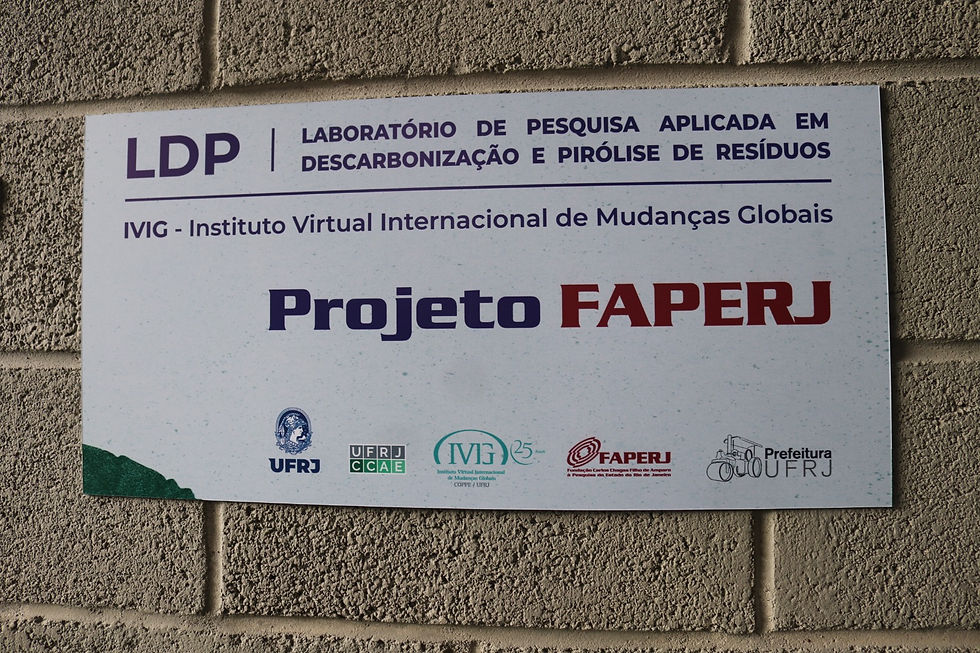
Rio de Janeiro – The International Virtual Institute for Global Change (IVIG) inaugurated, on December 10, 2025, the LDP – Laboratory for Applied Research in Decarbonization and Pyrolysis of Waste, on Ilha do Fundão, in an area ceded by the University Prefecture of UFRJ, near Guanabara Bay. The new infrastructure consolidates an applied research platform focused on the thermochemical conversion of waste and carbon capture and use, with potential for technological and environmental impact.

Infrastructure and financing
The establishment of the laboratory was made possible through a project funded by the Carlos Chagas Filho Foundation for Research Support of the State of Rio de Janeiro (FAPERJ) , with an investment of approximately R$ 7 million , allocated to structuring the experimental infrastructure and consolidating the research lines.
This funding enabled the acquisition of strategic equipment and the development of a plant capable of operating on a pilot and semi-industrial scale, bringing research closer to real-world application conditions.
Pyrolysis reactor and applied research
Among the main advances resulting from the project is the acquisition of a robust pyrolysis reactor, of Chinese origin, weighing 18 tons, supplied by the Beston Group company.
The equipment allows for advanced thermochemical conversion testing of solid waste and detailed characterization of process products and byproducts, such as biochar, bio-oil, and condensable gases.
The importance of the research lies in evaluating the potential uses of these materials.
Biochar, for example, stands out as a valuable soil conditioner for agriculture, as it improves water and nutrient retention, in addition to acting as a long-term carbon sequestrator, contributing to the mitigation of climate change.
In parallel, the condensable oils and gases generated in the process are being studied as potential sources of renewable energy or as chemical feedstocks, adding value to waste that would otherwise be discarded.
The large-scale operation thus contributes to improving operational conditions and evaluating technological routes with potential for industrial application and sustainable waste management.


Decarbonization and soda ash production plant
The laboratory also features a decarbonization plant with entirely national technology, developed by the company Karbonatus, based in Goiás. The unit is dedicated to capturing and converting carbon dioxide (CO₂) into sodium carbonate (soda ash), a strategic industrial input.
The process involves bubbling CO₂ through a caustic soda (NaOH) solution, promoting gas capture and stable carbon fixation. Part of the CO₂ used comes from gases generated in the pyrolysis reactor and from a biomethane-powered generator operating in the laboratory itself.

Strategic importance of soda ash
Soda ash is widely used in the manufacture of glass, soaps, detergents, and in water treatment. Currently, Brazil is heavily dependent on imports of this product to meet its domestic demand. In this context, the research developed at LDP takes on a strategic character by demonstrating a national technological route capable of converting CO₂ into a high-value input, contributing to innovation, productive autonomy, and the country's decarbonization agenda.

Presence of authorities and institutional commitment
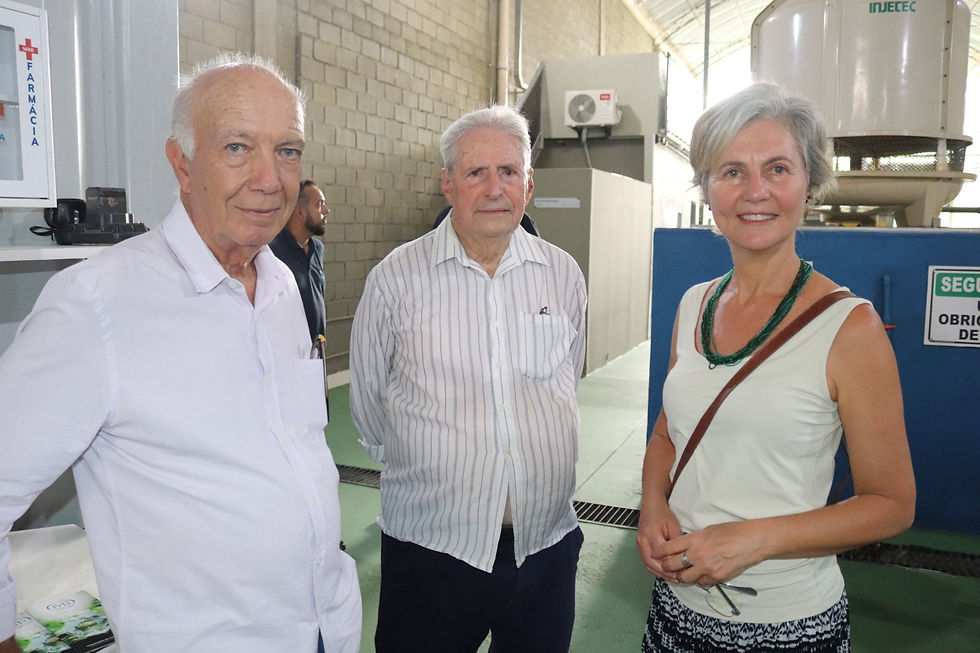
The inauguration ceremony was attended by the rector of UFRJ, Roberto de Andrade Medronho, the president of CAPES, Denise Pires de Carvalho, the head of the Rector's Office and professor at the UFRJ School of Chemistry, Fabiana Valeria da Fonseca, the dean of the Technology Center, Professor Walter Issamu Suemitsu, as well as the director of Port Management at PortosRio, university leaders, and representatives of partner institutions and companies.

University administration highlights technology and innovation.
During the event, Rector Roberto Medronho emphasized the importance of initiatives that strengthen the university's capacity in applied research, technology, and innovation, highlighting that structuring projects such as the IVIG laboratory reinforce the institutional commitment to sustainability agendas and the production of knowledge geared towards contemporary challenges.

CAPES and human resource development
The president of CAPES, Denise Pires de Carvalho, highlighted the importance of research environments that integrate robust scientific infrastructure, advanced training of human resources, and technological applications connected to current challenges. She stated that the IVIG laboratory strengthens postgraduate programs and creates opportunities for students and researchers to work on emerging themes related to global changes.

Technology Center highlights integration between new technologies and academic training.
The Dean of the Technology Center at UFRJ, Professor Walter Issamu Suemitsu, praised the project and highlighted that a laboratory of this size is neither simple to conceive nor to implement. He emphasized the determination of IVIG, in the person of Professor Marcos Freitas, and the support of UFRJ, through Rector Roberto Medronho, in making possible an infrastructure that integrates new technologies for the conversion and utilization of waste with academic training and research, bringing students and researchers closer to topics such as pyrolysis, decarbonization, and waste valorization.

PortosRio highlights partnership with UFRJ in innovative waste management project.
The Director of Port Management at PortosRio, Ricardo Ganen, highlighted the company's presence in the laboratory as an unprecedented initiative in the country. According to him, the partnership with UFRJ and IVIG aims to address the liabilities associated with solid waste, one of the great challenges of contemporary society.
Ganen emphasized that, with the support of the Ministry of Ports, PortosRio is formalizing an agreement with UFRJ to mitigate operational, technical, scientific, and social liabilities.
"We are collaborators and are in the process of donating two autoclaves, which will be used to inertize solid healthcare waste, preparing it for pyrolysis," he explained.
These autoclaves are essential for the inertization stage, which is necessary before sending the waste for recovery processes or proper disposal.
"For us, it is a great source of satisfaction to collaborate with the university and to be part of an academic environment of excellence, in one of the most internationally renowned and respected institutions, which is UFRJ," he concluded.

International cooperation and perspectives
The laboratory is already establishing itself as a strategic platform for national and international partnerships, with agendas that demonstrate a growing interest in scientific collaborations focused on waste valorization, carbon capture, and applied innovation.
As part of this effort, in September 2025, Professor Marcos Freitas participated in an academic mission in Weihai, China, at the invitation of Shandong University. The mission aimed to discuss global challenges related to the energy transition and climate change, in a context of growing international concern about reducing greenhouse gas emissions and the search for sustainable, low-carbon technological solutions.
Reinforcing this connection, on the eve of the laboratory's inauguration, the unit received a visit from representatives of the Consulate General of China in Rio de Janeiro, including Zhou You, consul for science and technology affairs, and Jing Yanhui, commercial consul.
During the meeting, concrete possibilities for cooperation in technology and innovation, energy recovery from waste, and academic and scientific exchange between Brazil and China were discussed.

Consolidation of a strategic platform
At the end of the ceremony, participants agreed that the new laboratory consolidates a strategic base for IVIG and UFRJ , creating conditions for the continuity of research, the training of new academic staff, and the expansion of partnerships on central themes for the future of waste management, thermal conversion, and carbon capture.

PHOTOGRAPHIC RECORD OF THE EVENT




Comments